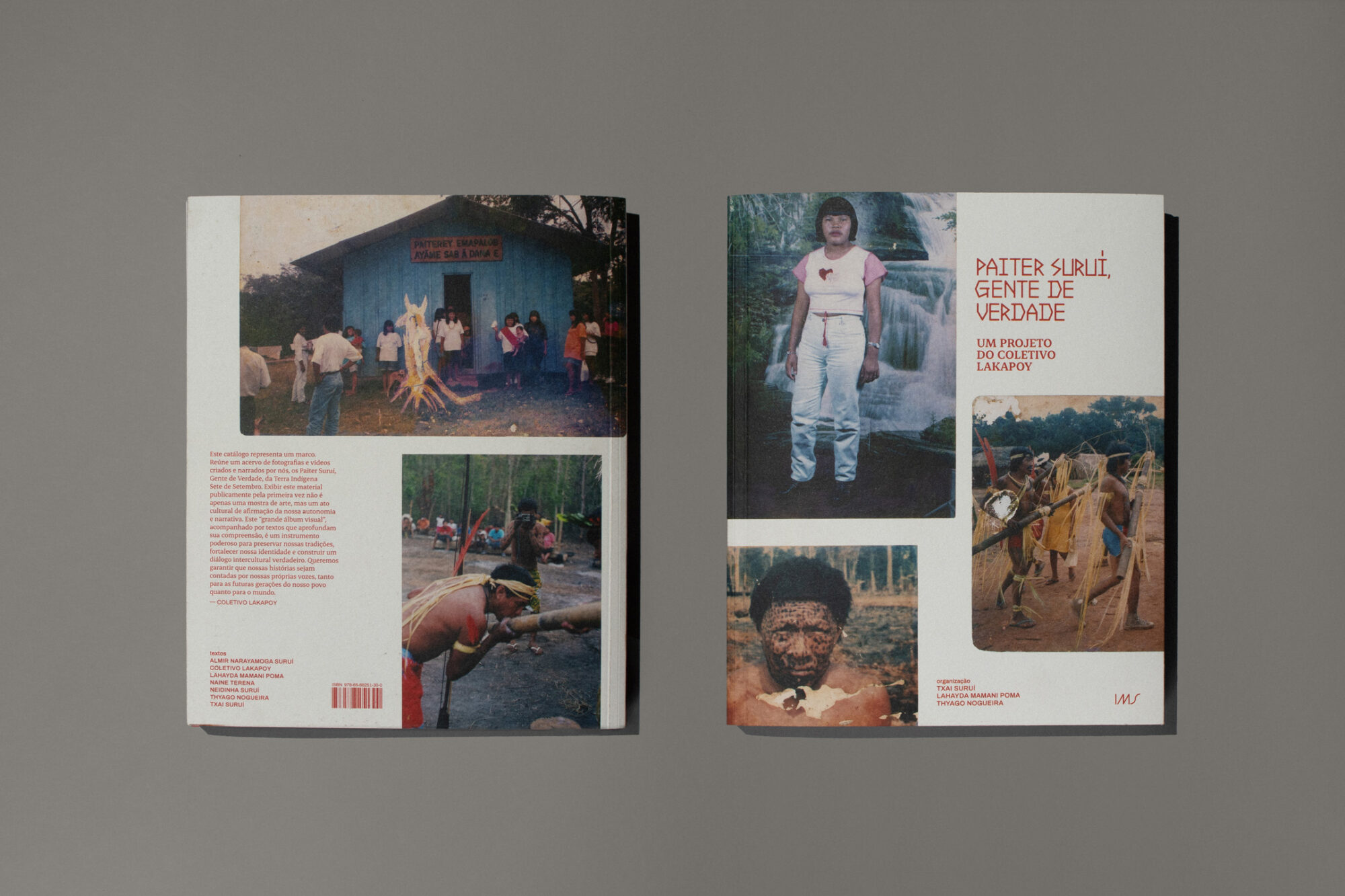
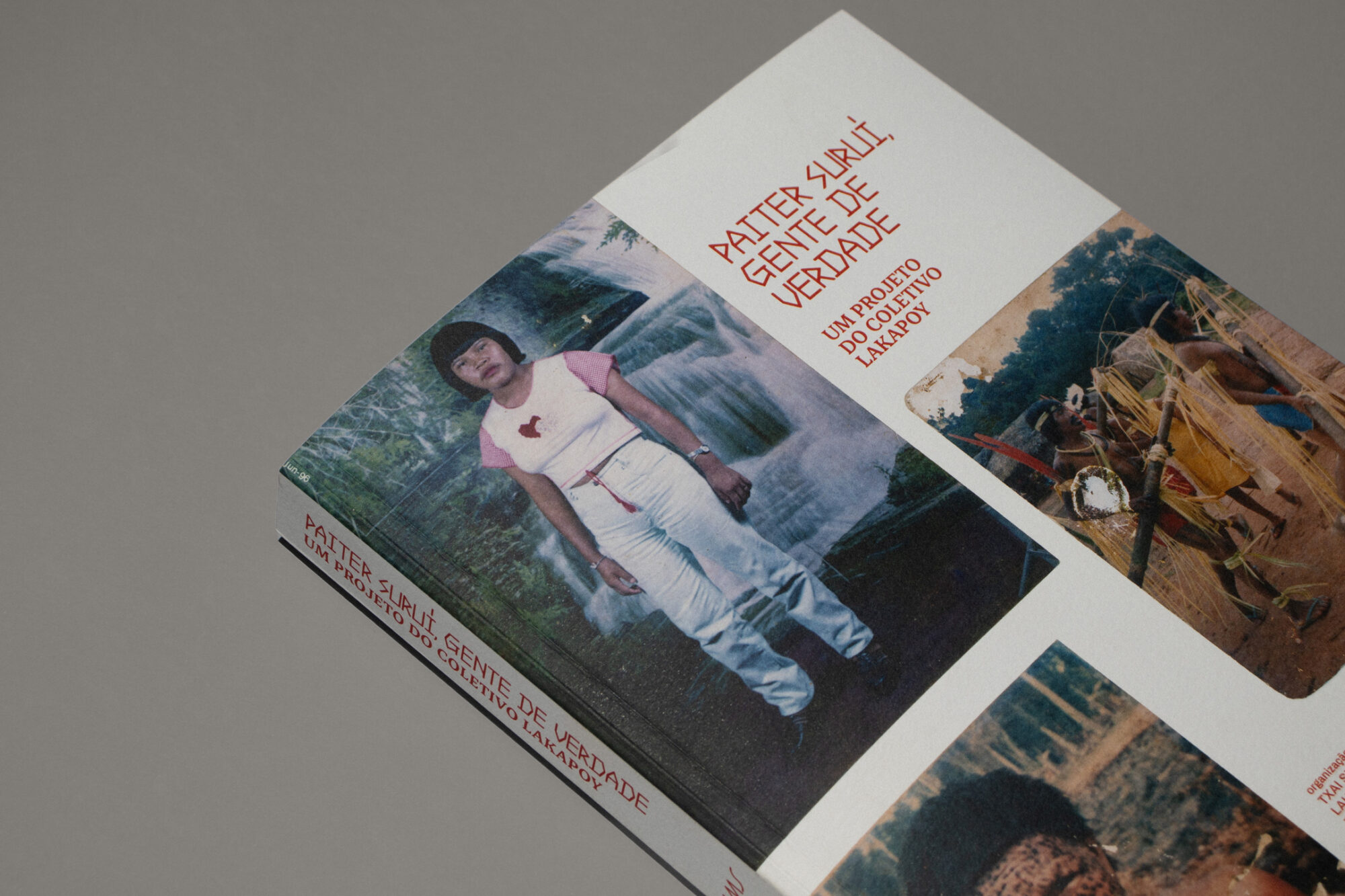
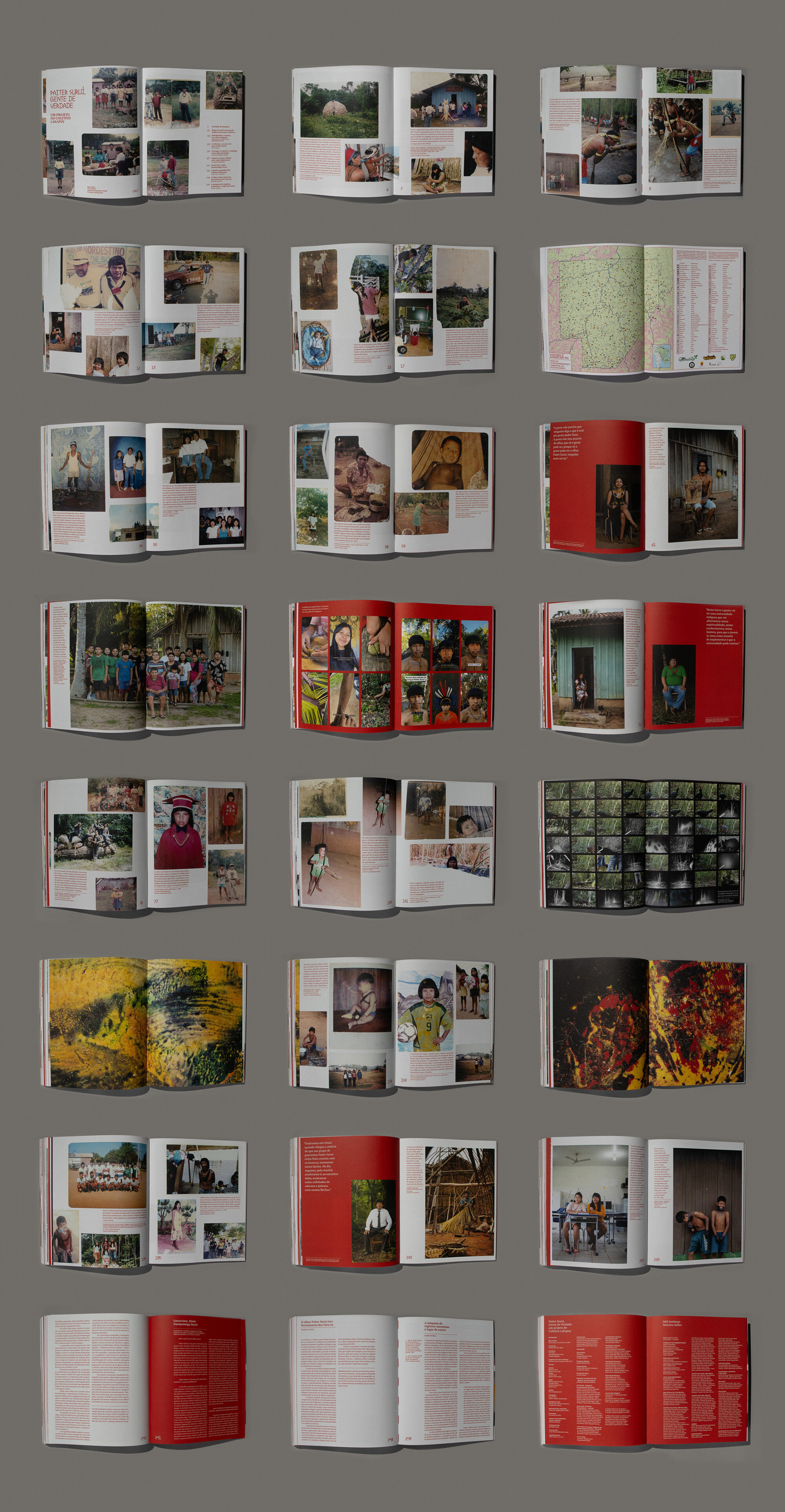
Curated by Txai Suruí, Lahayda Mamani Poma, Thyago Nogueira, and supervised by Almir Narayamoga Suruí, the exhibition narrates the history, traditions, affections, daily life, and resistance of the Paiter Suruí people based on their own videos and photographs, featuring more than 800 images taken since the 1970s, when cameras arrived at the Sete de Setembro Indigenous Land (RO/MT).
The material was collected and digitized by the Lakapoy Collective, a pioneering indigenous audiovisual group, whose members participated in the exhibition project: Ubiratan Gamalodtaba Suruí, Oyexiener Suruí, Gabriel Uchida, Christyann Ritse, Kennedy Suruí, Txai Suruí, Oyago Suruí, Samily Suruí, and Oyorekoe Luciano Suruí.
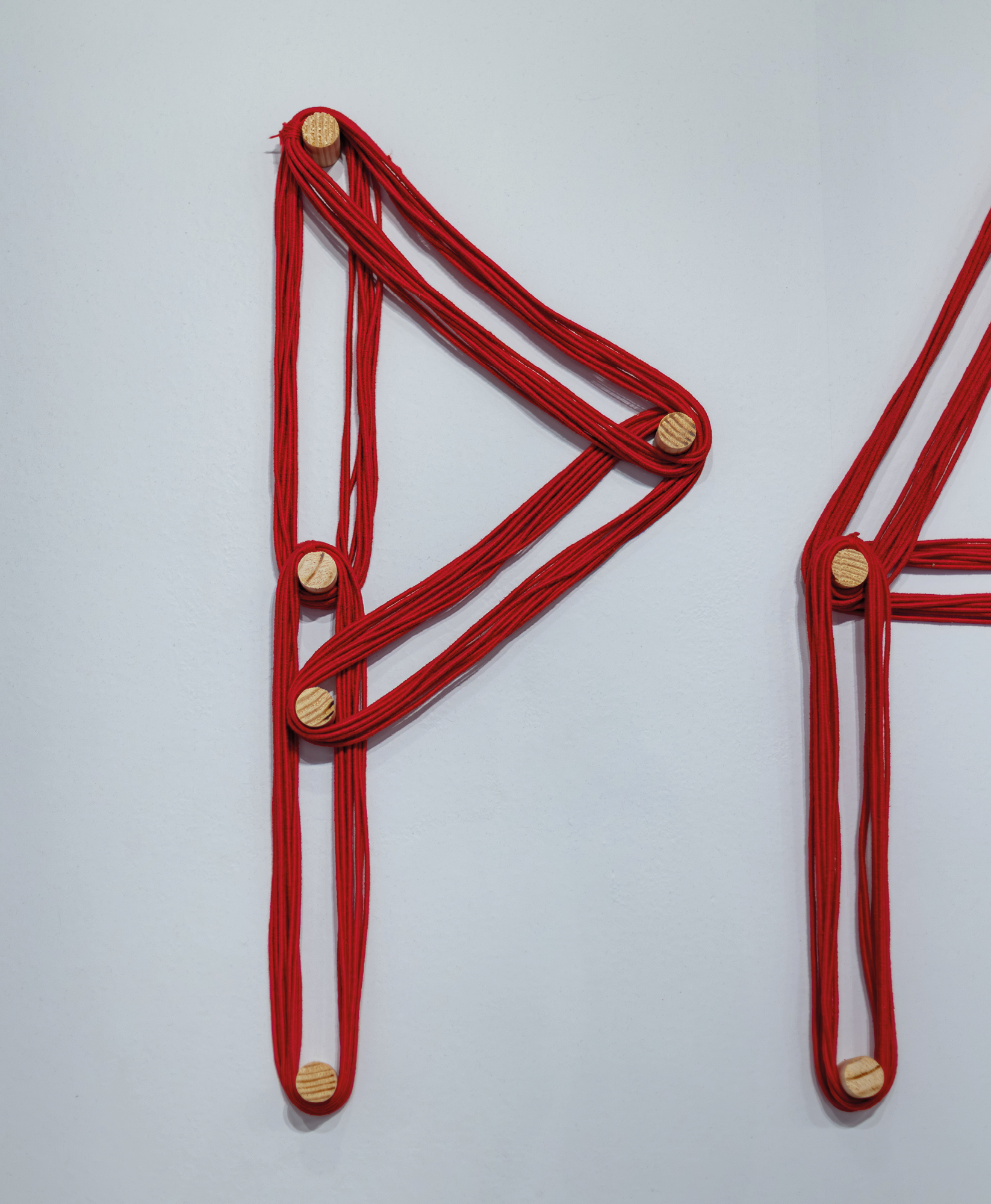
We started with the desire to incorporate the Paiter Suruí's production into the materiality of the exhibition and developed the title sign using Agoyab – necklaces that symbolize power and leadership. Made by artisans from different clans, the necklaces were specially commissioned for the occasion.
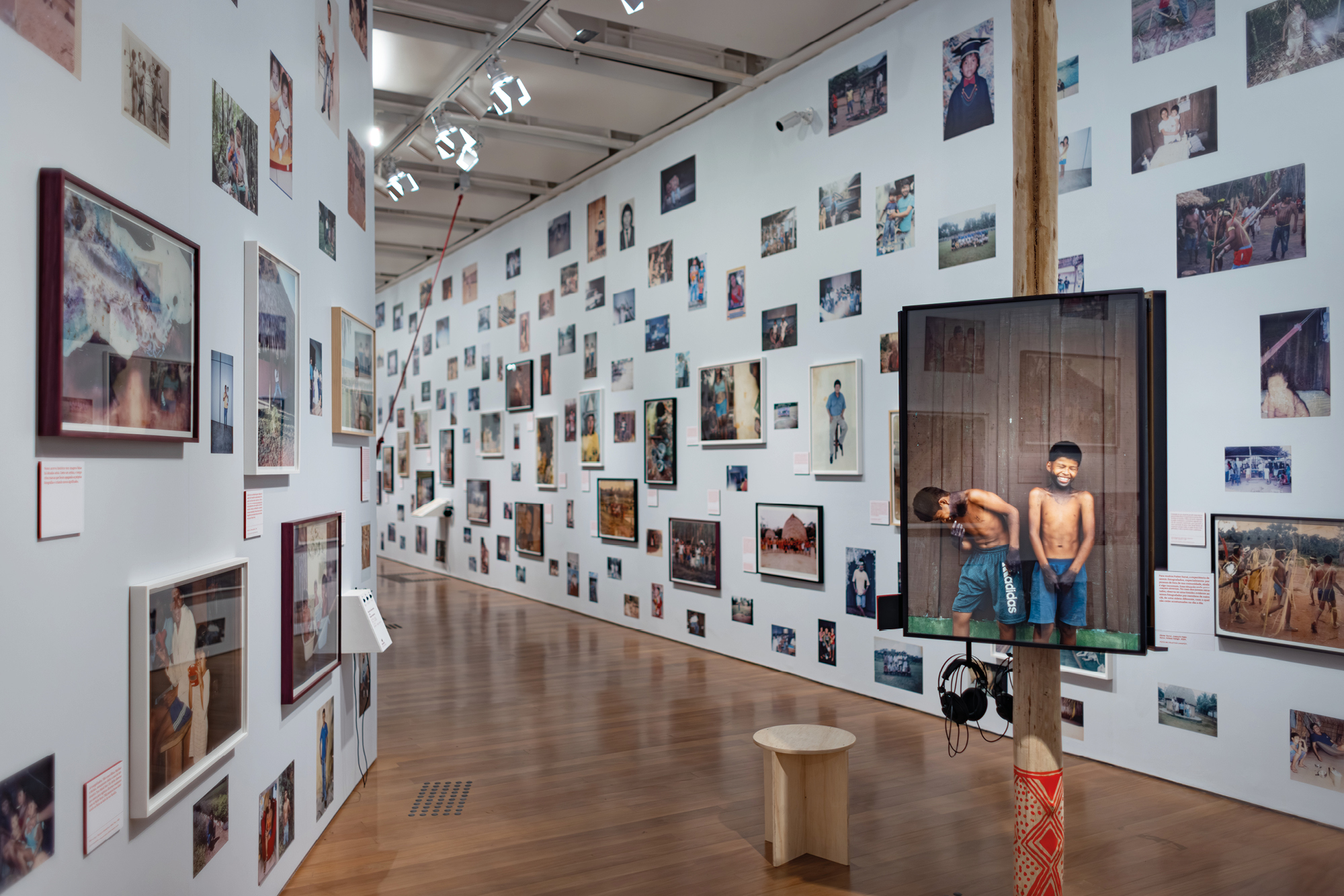
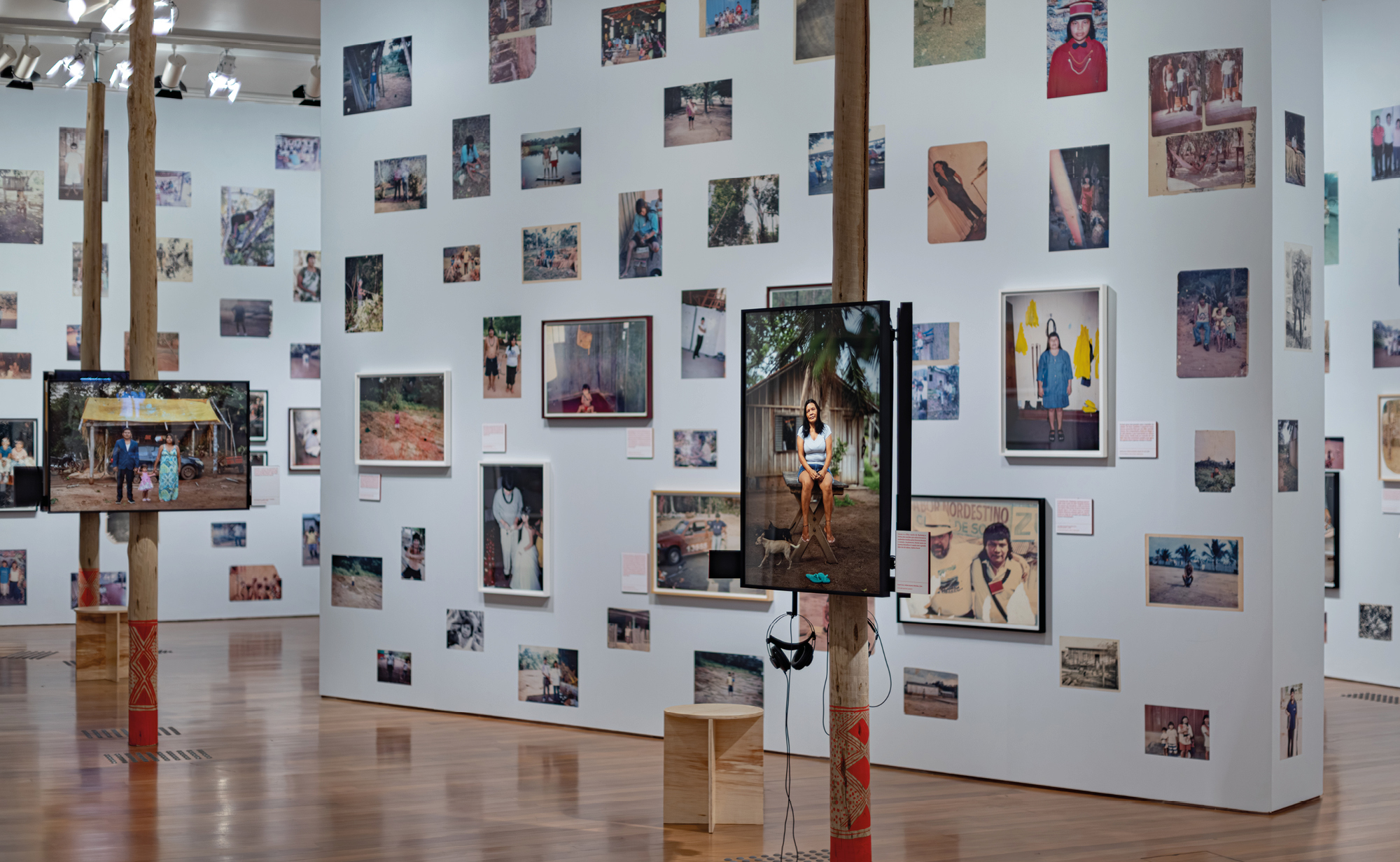
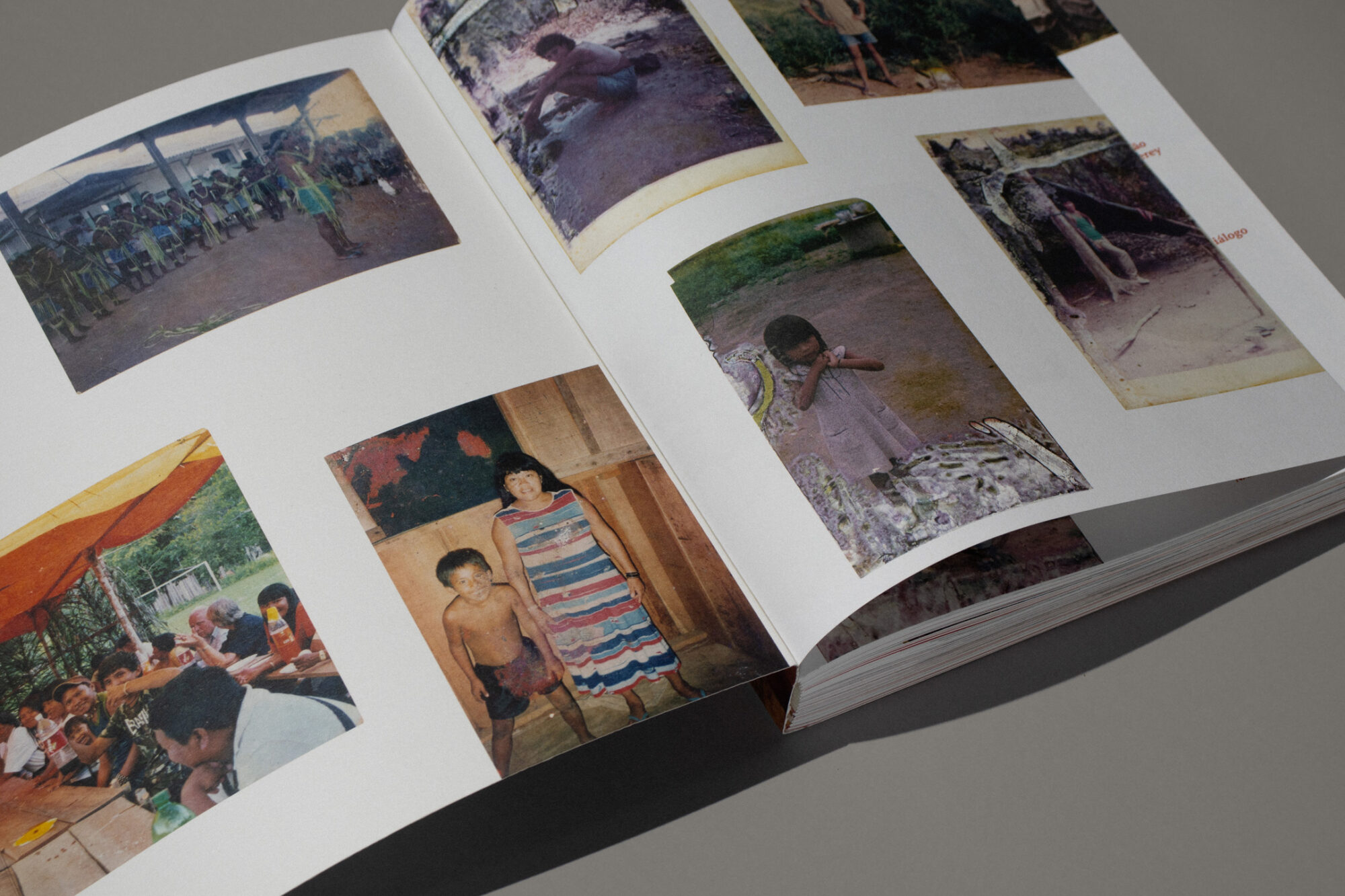
Faced with the challenge of displaying a selection of more than 600 photographs from the historical collection in the exhibition space, we worked with the curators to design wallpaper that covers the entire length of the room. The Paiter Suruí people wrote captions for about a hundred images, which were then displayed alongside them to provide more context about the photos.
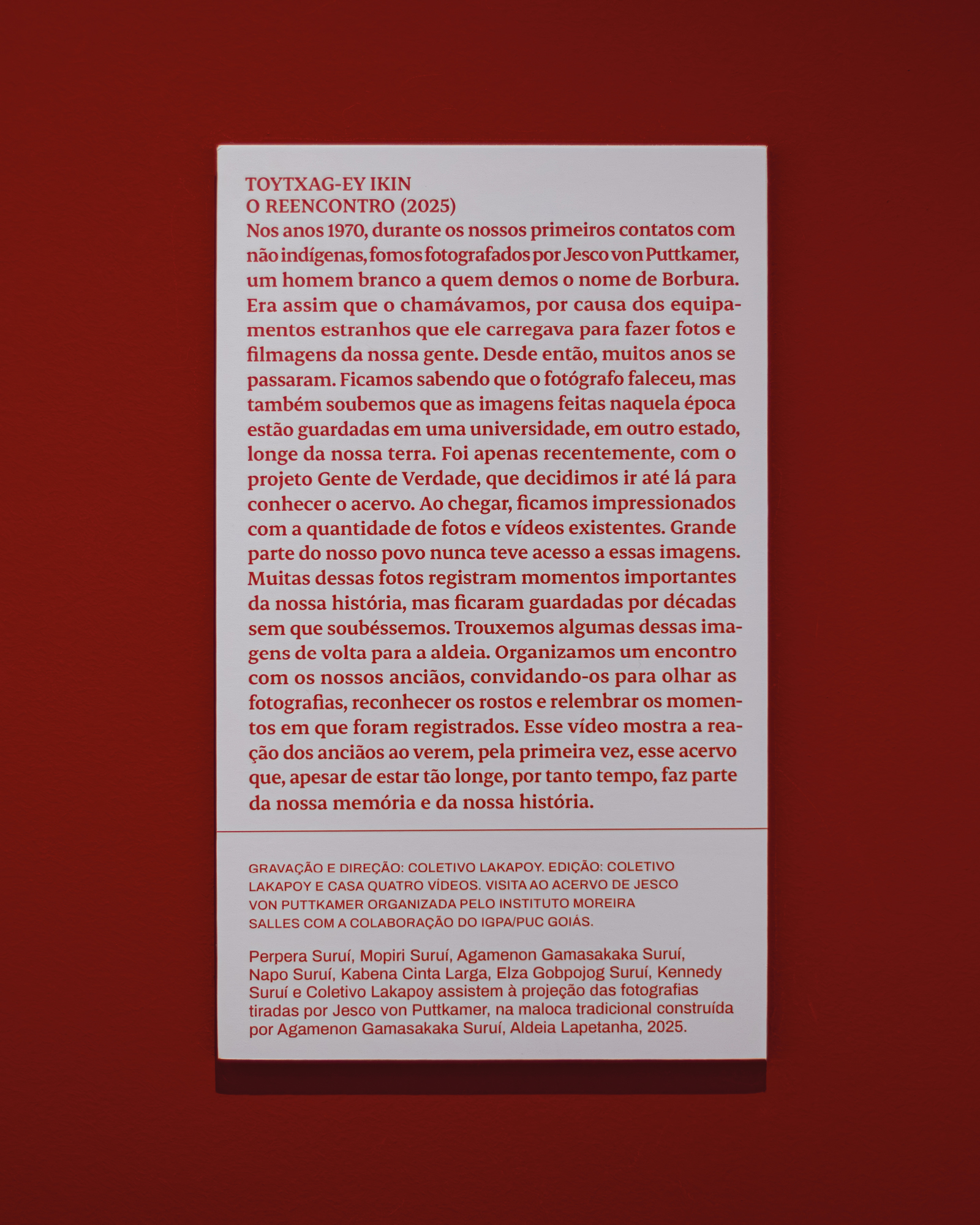
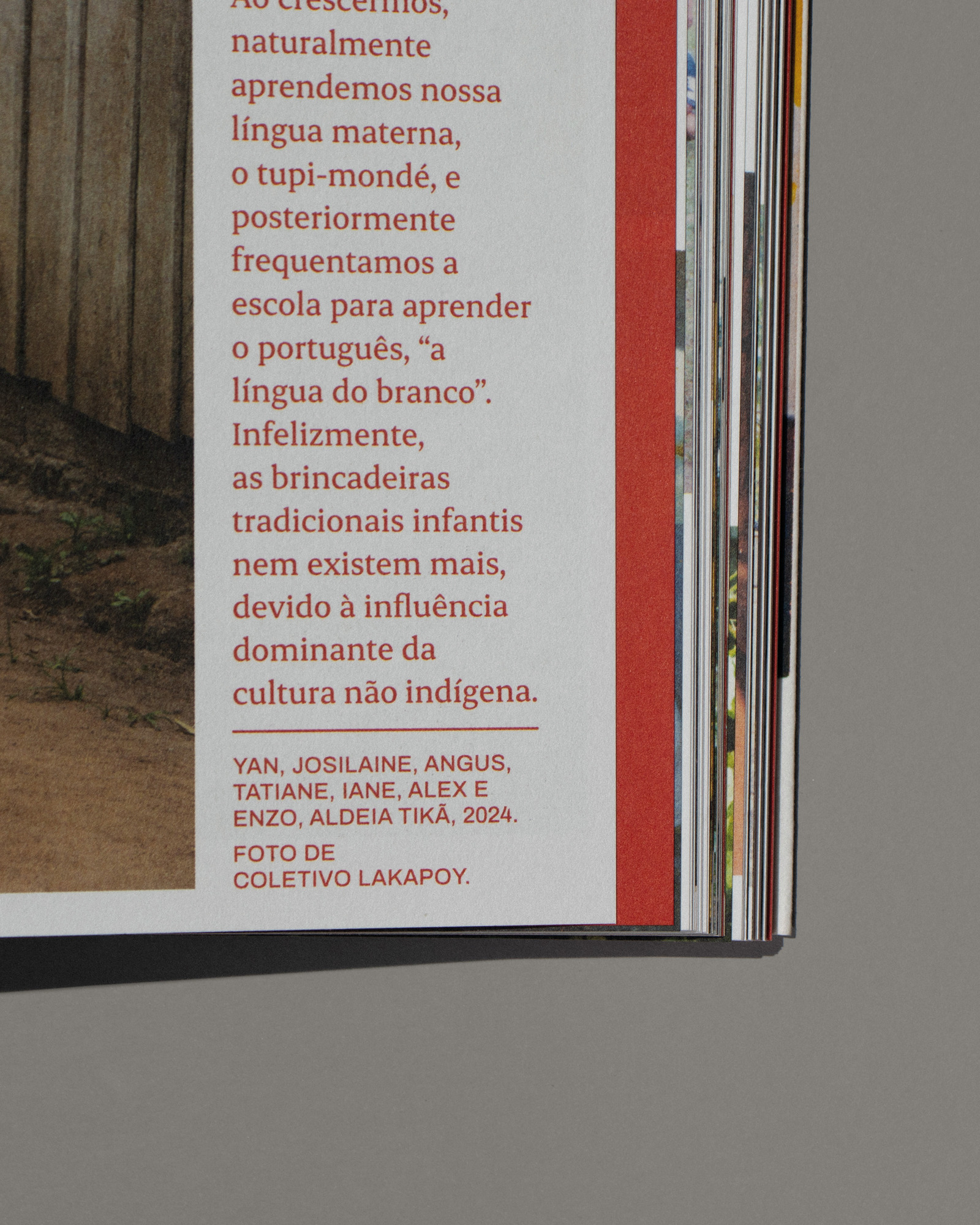
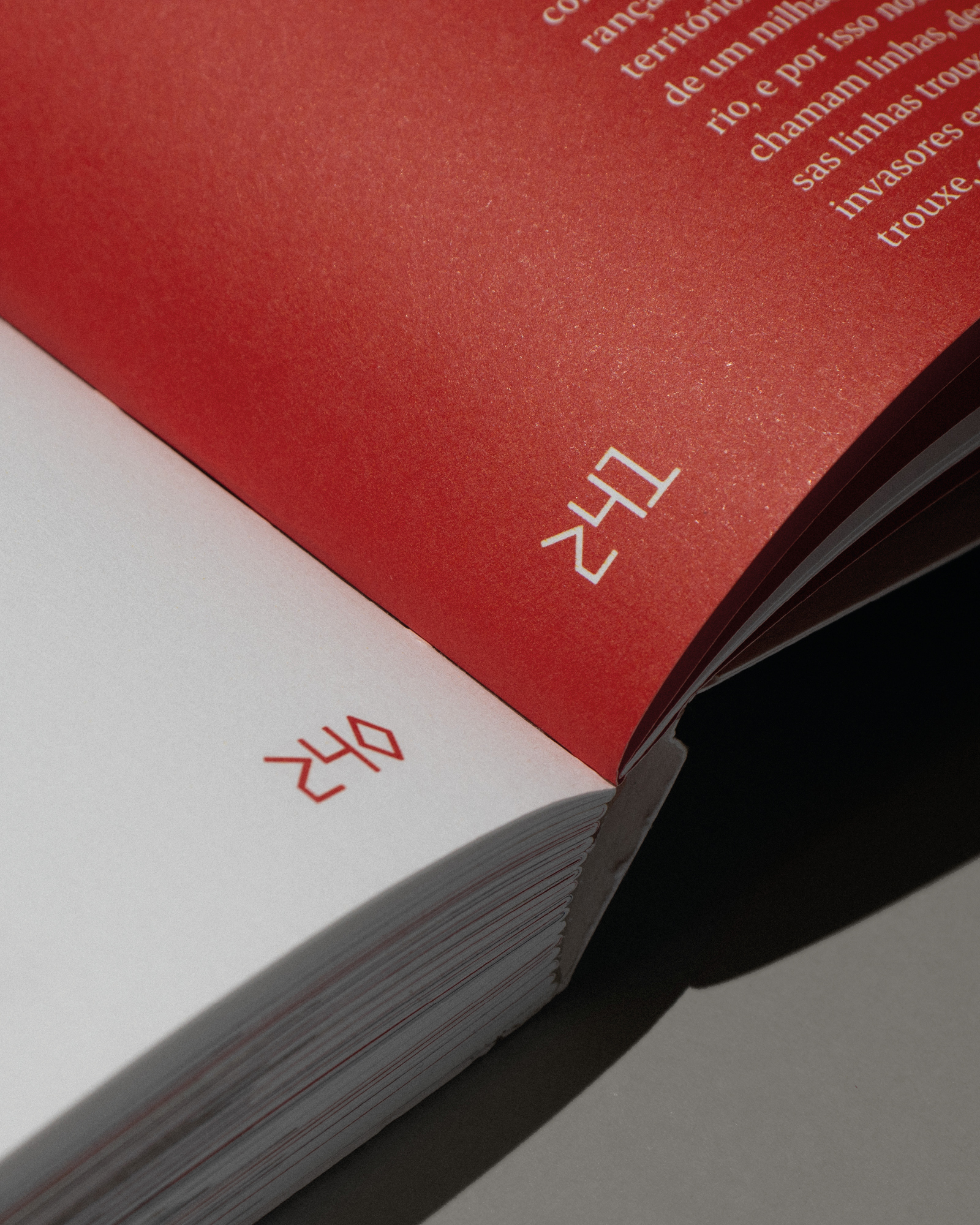
The visual identity is based on the use of red and white, colors present in the adornments used in Mapimaí (Feast of the Creation of the World). The colors, used in the captions and wall texts, are also present in the necklaces, nets, and other materials observed during the visit to the territory during the research carried out for the creation of the visual identity.
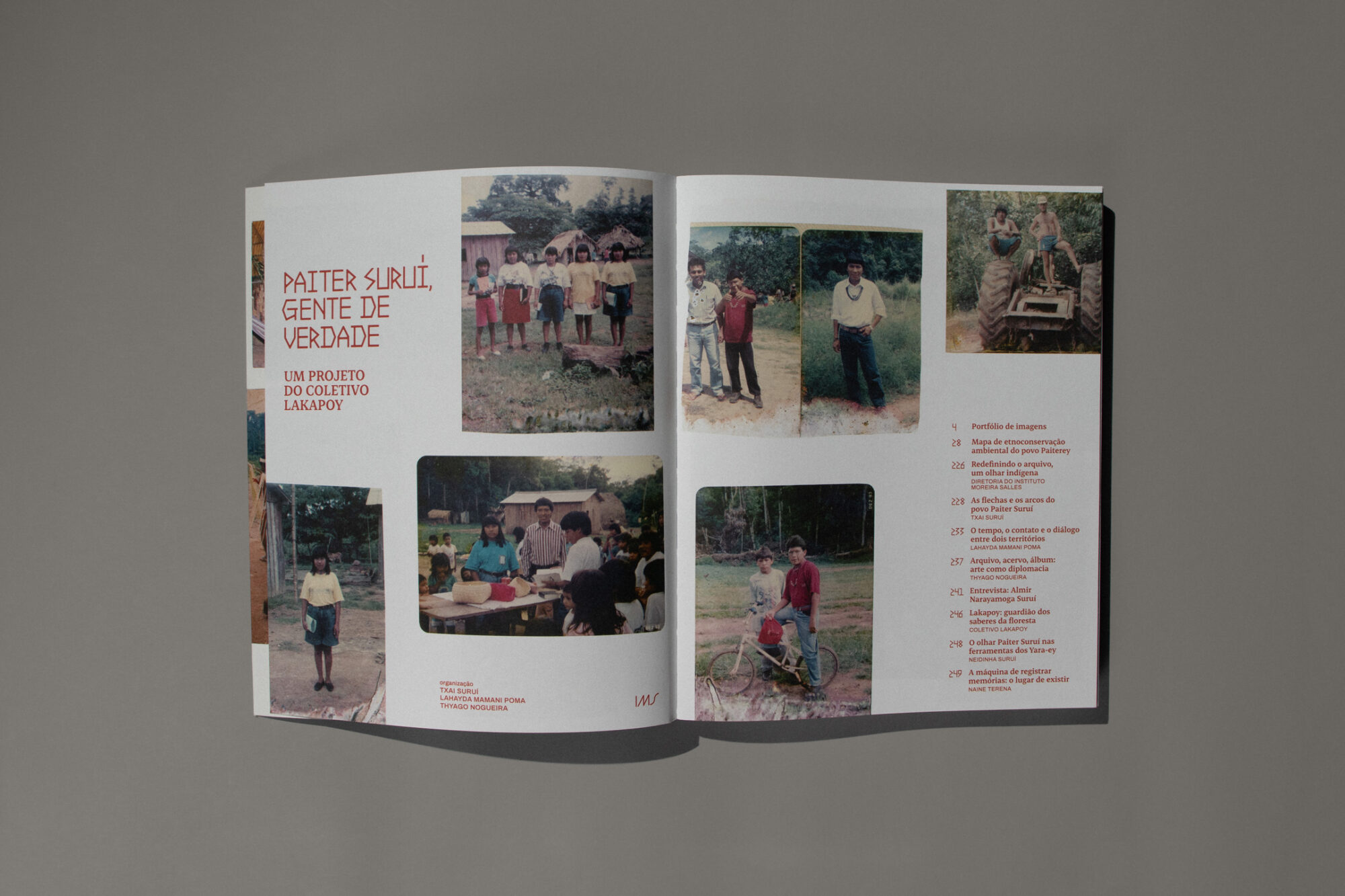
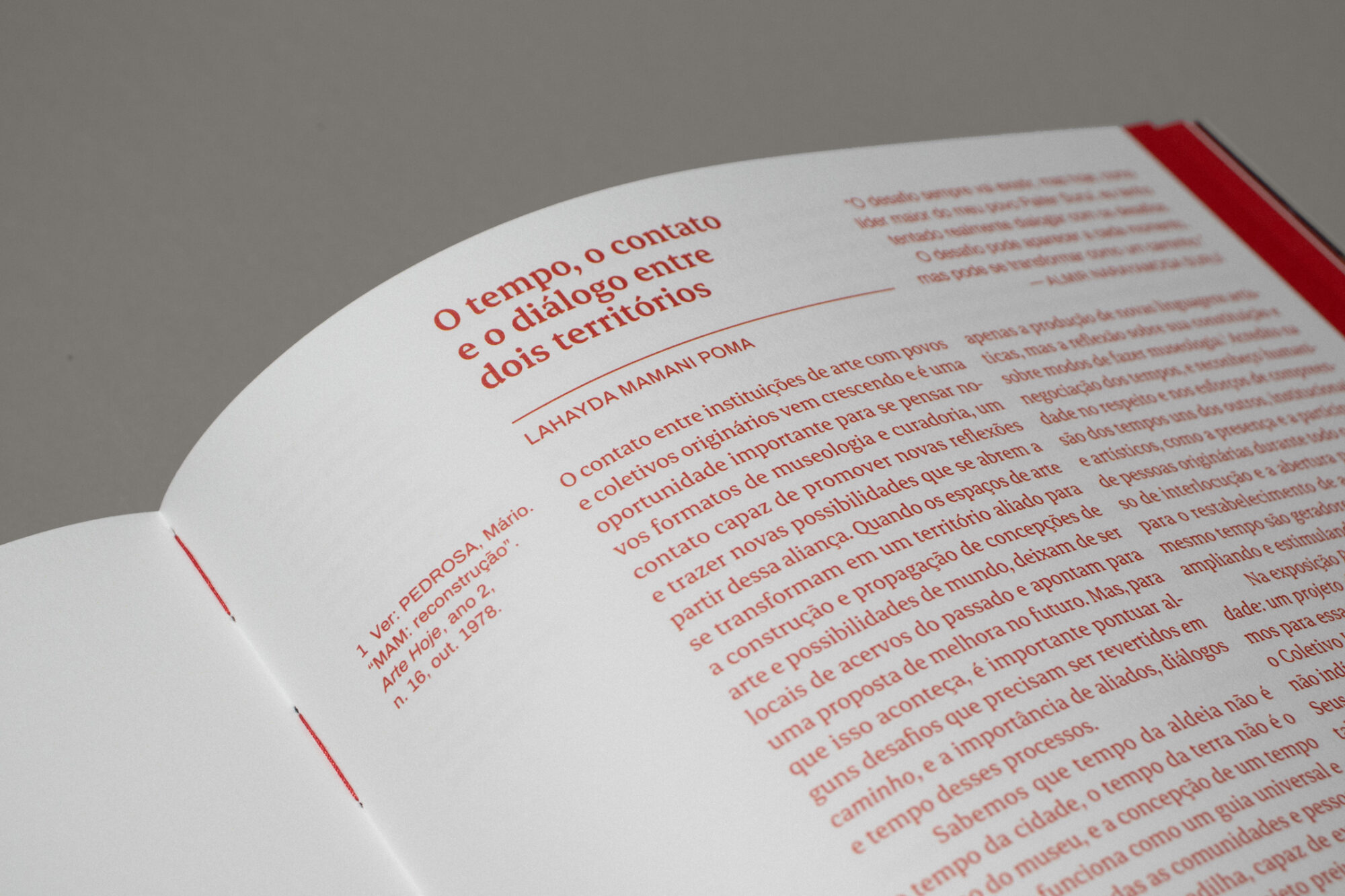
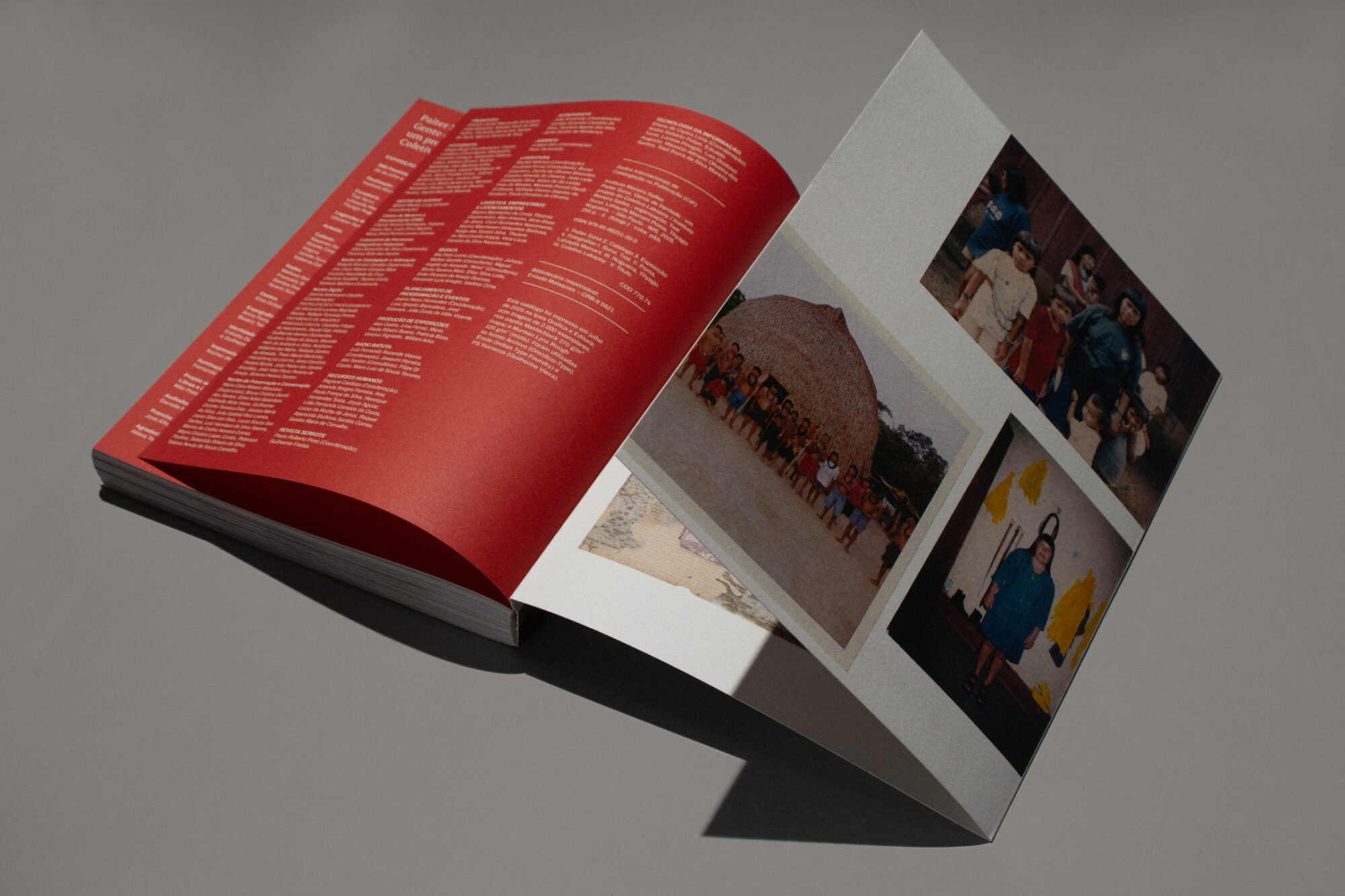
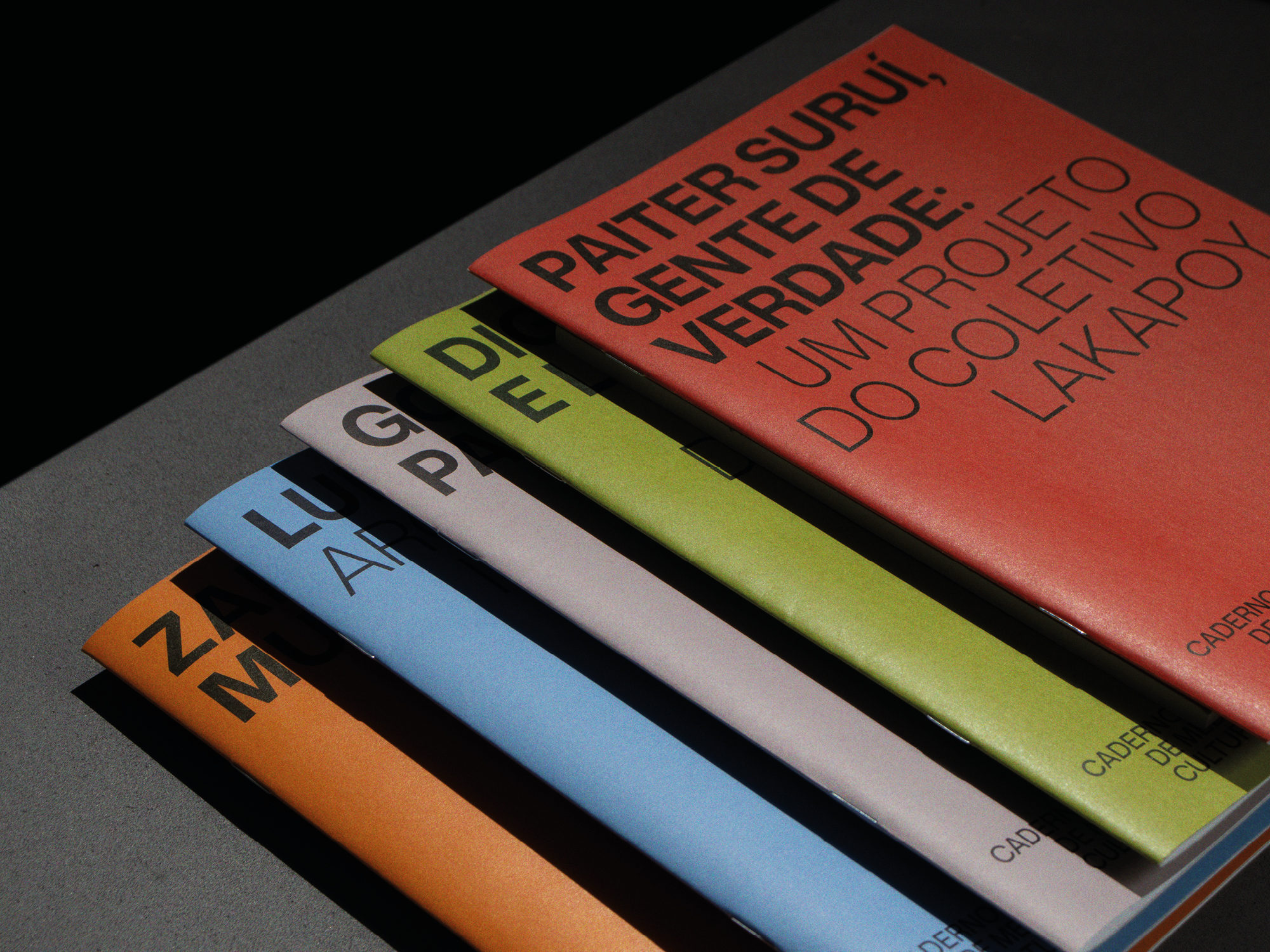
Like the exhibition space, the catalog’s pages are filled with images from the collection that have been digitized to date. The book also features texts by the curatorial team, an essay by researchers Naine Terena and Neidinha Suruí, an interview with Almir Narayamoga Suruí, and other highlights.